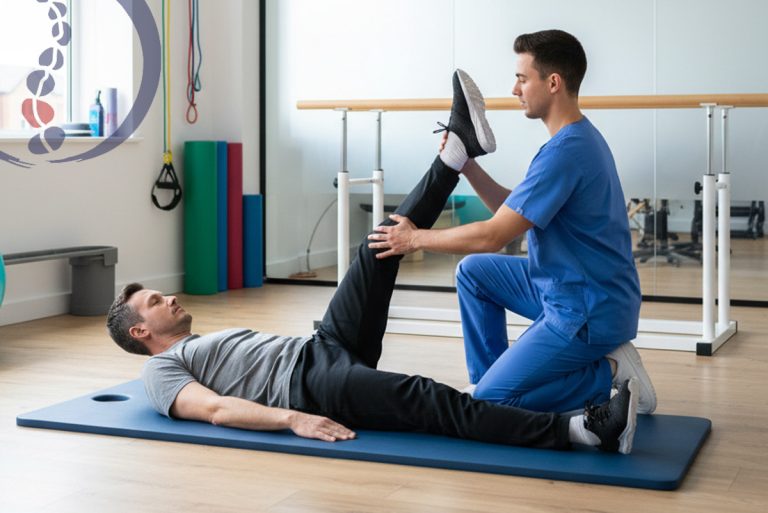
Reduced mobility can affect walking, exercise, work and everyday activities. It may develop gradually because of stiffness, weakness or reduced activity, or occur following an injury, surgery or health condition.
Physiotherapy can help identify the factors limiting movement and develop an individual rehabilitation programme to improve mobility, strength and physical function.
Rather than simply treating areas that feel tight, physiotherapy considers how joints, muscles, balance, strength and movement patterns work together. At Bluebell Hydro & Physio, our physiotherapy service in Birmingham is tailored to each person’s individual abilities, symptoms and rehabilitation goals.
What can cause reduced mobility?
Reduced mobility does not have a single cause. Understanding why movement has become difficult is important when deciding how rehabilitation should be approached.
Factors may include:
- Joint stiffness or restricted range of movement
- Muscle weakness
- Pain or discomfort during movement
- Reduced balance or coordination
- Injury or surgery
- Neurological conditions
- Periods of reduced activity or immobility
- Changes in physical function associated with ageing
Several factors can occur at the same time, which is why an individual assessment can be more useful than simply applying a generic stretching or exercise routine.
Can physiotherapy improve mobility?
Physiotherapy can support improved mobility by identifying the physical factors restricting movement and addressing them through an appropriate rehabilitation programme.
Depending on the individual, treatment may focus on joint movement, muscle strength, balance, coordination, walking or specific functional activities.
The objective is not simply to increase flexibility. For many patients, better mobility means being able to perform meaningful everyday activities with greater confidence and independence.
Can physiotherapy reduce stiffness?
Stiffness can have different causes. It may involve reduced joint movement, muscle tightness, inactivity, pain-related guarding or changes following injury or surgery.
A physiotherapist can assess how stiffness is affecting movement and determine which strategies may be appropriate.
These may include:
- Mobility and range-of-motion exercises
- Progressive movement
- Stretching where appropriate
- Strengthening exercises
- Functional rehabilitation
- Manual techniques when clinically appropriate
Treatment should address the reason movement is restricted rather than assuming that every feeling of tightness requires the same approach.
How does physiotherapy help improve physical function?
Physical function refers to the ability to perform movements and activities required in everyday life.
For one person, improving function may mean being able to walk further. For another, it may mean getting out of a chair more easily, returning to work, climbing stairs or participating in sport.
A physiotherapy programme can therefore combine several different components according to the person’s goals.
Mobility and range-of-motion exercises
Exercises may be used to maintain or progressively improve movement around joints where restriction is affecting function.
The appropriate type and amount of movement depend on the underlying condition and the person’s current abilities.
Strengthening
Mobility depends on more than flexibility. Adequate muscle strength is also important for controlling movement, supporting joints and performing everyday activities.
Progressive strengthening may therefore form an important part of rehabilitation where weakness contributes to reduced function.
Balance and coordination
Some people have sufficient strength and joint movement but still experience difficulty with mobility because of balance or coordination.
In these situations, physiotherapy may include exercises designed to challenge postural control, stability and functional movement.
Walking and functional rehabilitation
Rehabilitation can also focus directly on the activities a person wants or needs to perform.
This may involve practising walking, transfers, stairs or other functional movements under appropriate supervision.
What about muscle tension and tightness?
Muscle tension can occur for many reasons, including prolonged positions, changes in activity, physical loading or compensation for pain or weakness elsewhere in the body.
Although stretching or hands-on treatment may provide benefit in some circumstances, persistent muscle tension should not automatically be treated as an isolated problem.
A physiotherapist can assess whether factors such as strength, movement patterns, workload, posture or joint mobility are contributing to the symptoms and adapt treatment accordingly.
Does physiotherapy always involve manual therapy?
No. Physiotherapy is broader than massage or hands-on treatment.
Manual therapy may form part of treatment when clinically appropriate, but rehabilitation can also involve exercise, education, movement retraining, strengthening, balance work and strategies for managing physical activity.
The treatment selected should depend on the assessment and rehabilitation goals rather than following the same approach for every patient.
Mobility after surgery or injury
Reduced mobility is common during recovery from some injuries and surgical procedures.
Rehabilitation may focus progressively on restoring movement, strength and functional ability while respecting any relevant medical or post-operative restrictions.
Bluebell provides dedicated orthopaedic and post-surgical rehabilitation for patients requiring more specific support following surgery or musculoskeletal problems.
Mobility and neurological conditions
Neurological conditions can affect movement in different ways, including changes in strength, balance, coordination, muscle tone and walking ability.
For these patients, improving mobility may require a specialist neurological rehabilitation programme rather than a general exercise approach.
Learn more about Bluebell’s neurological rehabilitation services.
Can hydrotherapy help with mobility?
For some patients, rehabilitation can also take place in a specialist warm-water environment.
Buoyancy supports part of the body’s weight, while water resistance can be used to challenge movement and strength. This can create different rehabilitation opportunities from exercising on land.
Where clinically appropriate, hydrotherapy may complement land-based physiotherapy as part of an individual rehabilitation programme.
Find out more about Bluebell’s specialist hydrotherapy service in Birmingham.
Do you need regular physiotherapy to improve mobility?
There is no standard number or frequency of physiotherapy appointments that is appropriate for everyone.
The amount of treatment required depends on the reason for reduced mobility, the individual’s starting point, rehabilitation goals and response to treatment.
An important part of physiotherapy is often what happens between appointments. A personalised exercise or activity programme can allow patients to continue working towards their goals outside the clinic.
When should you consider seeing a physiotherapist?
A physiotherapy assessment may be appropriate when stiffness, weakness, pain or reduced movement is interfering with everyday activities or preventing you from returning to activities that matter to you.
Assessment can help identify which factors are limiting movement and whether physiotherapy, another rehabilitation approach or further medical assessment may be appropriate.
Physiotherapy for mobility and movement at Bluebell
At Bluebell Hydro & Physio, rehabilitation is based on individual assessment and meaningful functional goals rather than simply treating an area of discomfort.
Depending on your needs, treatment may involve physiotherapy, specialist rehabilitation or hydrotherapy, with the programme adapted as your movement and function change.
Explore our Physiotherapy service in Birmingham or contact Bluebell to discuss your mobility and rehabilitation needs with our team.