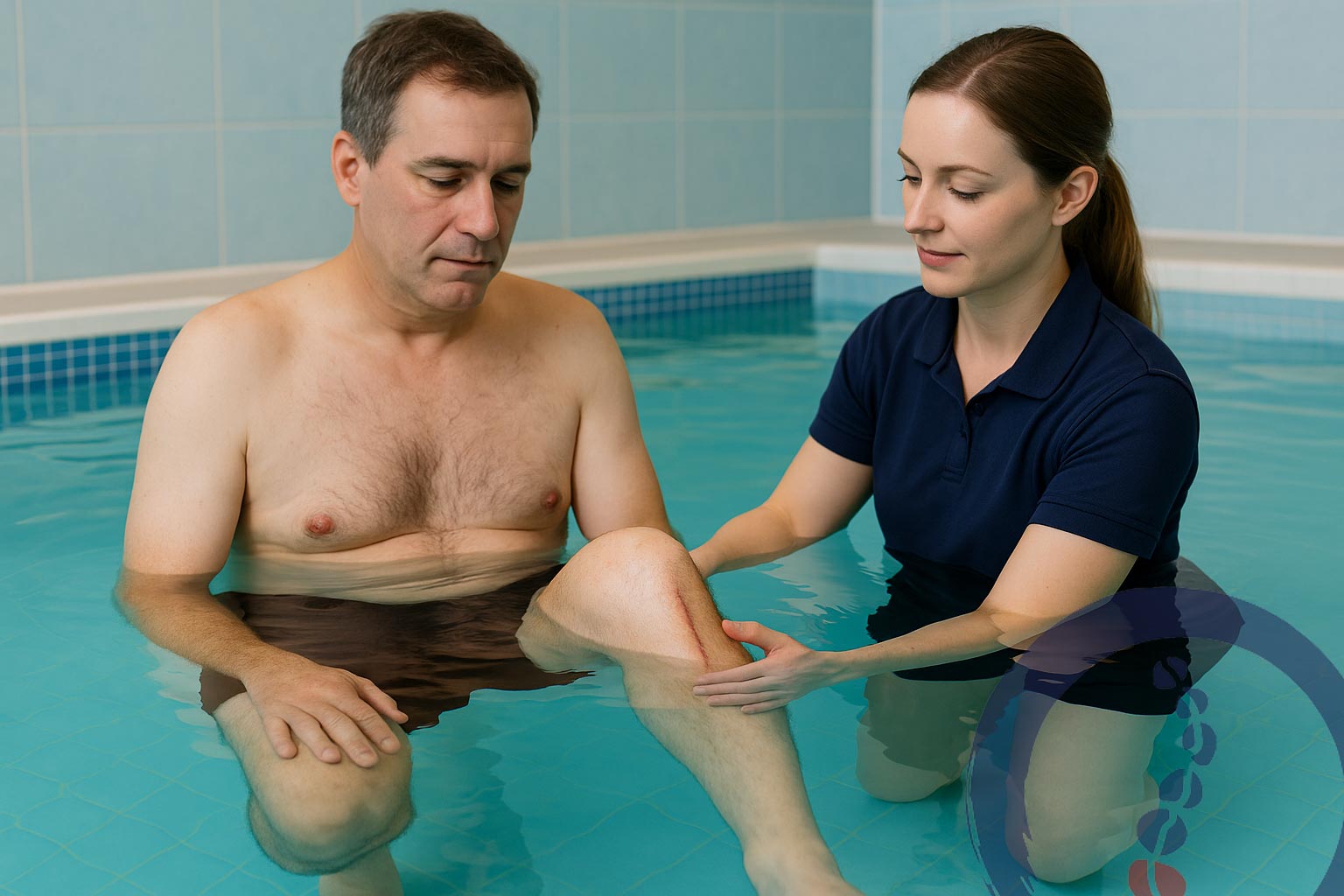
Hydrotherapy can give children the opportunity to move, exercise and practise physical skills in an environment that feels very different from land. By using the properties of warm water, a physiotherapist can adapt activities to a child’s individual abilities, movement difficulties and rehabilitation goals.
For some children, the buoyancy of water reduces the amount of body weight they need to support, while water resistance can be used to challenge movement and build strength progressively. This makes hydrotherapy a useful therapeutic option for some children with neurological, developmental, musculoskeletal or post-surgical needs.
At Bluebell Hydro & Physio in Birmingham, our paediatric hydrotherapy service is individually tailored following assessment, rather than using the same programme for every child.
What is paediatric hydrotherapy?
Paediatric hydrotherapy is physiotherapy performed in a purpose-designed warm-water environment. It is not simply swimming or recreational pool activity.
A physiotherapist uses the physical properties of water—including buoyancy, resistance and hydrostatic pressure—to support specific therapeutic goals.
Depending on the child’s needs, these goals may include:
- Improving mobility and functional movement
- Developing strength and muscular endurance
- Practising balance and coordination
- Maintaining or improving joint movement
- Supporting posture and movement control
- Building confidence with physical activity
- Supporting rehabilitation following surgery or injury
The activities selected, level of assistance and progression should be based on the individual child rather than their diagnosis alone.
What are the benefits of hydrotherapy for children?
One of the main advantages of exercising in water is that buoyancy can reduce loading through the body.
For a child who finds standing, walking or certain movements difficult on land, this may provide an opportunity to practise movements in a more supportive environment.
At the same time, water provides resistance in multiple directions. A physiotherapist can use this resistance to progressively challenge strength, balance and control without relying solely on conventional land-based exercises.
Potential benefits may include improved:
- Movement and mobility
- Muscle strength and endurance
- Balance and coordination
- Flexibility and range of movement
- Confidence when attempting physical activities
- Participation in rehabilitation
The benefits and appropriate goals will vary considerably between children. Hydrotherapy should therefore form part of an individualised rehabilitation programme rather than being viewed as a universal treatment.
Which children may benefit from hydrotherapy?
Hydrotherapy may be considered for children with a variety of physical and neurological needs.
Cerebral palsy
Children with cerebral palsy can experience difficulties involving movement, posture, balance and muscle tone.
The supportive aquatic environment may allow some children to practise movement differently from how they can on land.
Bluebell also provides dedicated therapy and rehabilitation for children with cerebral palsy as part of our specialist paediatric rehabilitation provision.
Developmental delay
Some children reach movement milestones later than expected or experience difficulties with gross motor development.
Hydrotherapy can provide another environment in which a physiotherapist can work on activities involving balance, coordination, strength and functional movement.
Families looking for more information can also read about our approach to developmental delay therapy.
Paediatric neurological conditions
Children affected by neurological conditions may have complex combinations of mobility, muscle tone, balance, coordination and functional difficulties.
For appropriate patients, hydrotherapy can be integrated with land-based physiotherapy as part of a broader neurological rehabilitation programme.
Learn more about paediatric neurological rehabilitation at Bluebell.
Orthopaedic conditions and recovery after surgery
Hydrotherapy may also be considered during some orthopaedic or post-surgical rehabilitation programmes.
Because buoyancy reduces loading, the aquatic environment can sometimes allow therapeutic movement to be introduced or progressed differently from land-based exercise.
However, returning to a pool after surgery depends on factors such as wound healing, medical restrictions and the type of procedure performed. A physiotherapist should determine when aquatic rehabilitation is appropriate.
Why can movement feel easier in water?
Buoyancy
Buoyancy supports part of the body’s weight. This can reduce loading and make some movements easier to practise.
Water resistance
Water naturally resists movement. The therapist can use this to challenge strength and control, with exercises adapted to the child’s ability.
Hydrostatic pressure and warm water
Water surrounds the body and provides consistent pressure, while a specialist hydrotherapy pool provides a controlled warm-water environment.
Together, these characteristics create rehabilitation conditions that cannot be reproduced exactly in a conventional treatment room.
Is hydrotherapy suitable for every child?
No. This is an important distinction.
A diagnosis alone does not determine whether hydrotherapy is suitable. The child’s medical history, physical abilities, current symptoms, therapeutic objectives and any relevant precautions or contraindications need to be considered.
That is why assessment by an appropriately qualified professional is important before starting a programme.
Parents can explore the broader range of paediatric conditions supported at Bluebell to understand how treatment may differ according to a child’s individual needs.
Is children’s hydrotherapy just exercise in a swimming pool?
No. Although sessions can be enjoyable and therapists may use games or engaging activities to encourage participation, clinical hydrotherapy has specific therapeutic objectives.
An activity that looks like play may actually be being used to encourage reaching, stepping, balance, trunk control, coordination or another functional movement.
This is particularly important with children: rehabilitation needs to be clinically purposeful while also being appropriate for the child’s age, abilities and engagement.
Hydrotherapy and land-based physiotherapy can work together
Hydrotherapy does not necessarily replace conventional physiotherapy.
For many children, the two environments can complement each other.
Skills can initially be explored or practised with the support provided by water and subsequently incorporated into land-based rehabilitation where appropriate.
This is one reason Bluebell takes a personalised approach to treatment rather than treating hydrotherapy as an isolated intervention.
If you would like to understand the distinction between the two approaches, read our guide to the difference between hydrotherapy and physiotherapy.
What happens during a paediatric hydrotherapy session?
A session will depend on the child’s assessment and treatment objectives.
The physiotherapist may use supported movements, walking or stepping activities, balance exercises, reaching tasks, strengthening exercises or age-appropriate games.
The difficulty and level of support can then be adjusted according to how the child responds.
For a more detailed explanation of the process, see what to expect during a hydrotherapy session.
Paediatric hydrotherapy in Birmingham at Bluebell
Bluebell Hydro & Physio provides specialist paediatric hydrotherapy in Birmingham within a dedicated hydrotherapy environment.
Our approach begins with understanding the child—not simply their diagnosis. Treatment can then be adapted around their mobility, functional abilities, rehabilitation goals and individual needs.
Where appropriate, hydrotherapy may also form part of a wider physiotherapy or neurological rehabilitation programme.
If you are considering hydrotherapy for your child, explore our Paediatric Hydrotherapy service or contact Bluebell to discuss your child’s needs with our team.