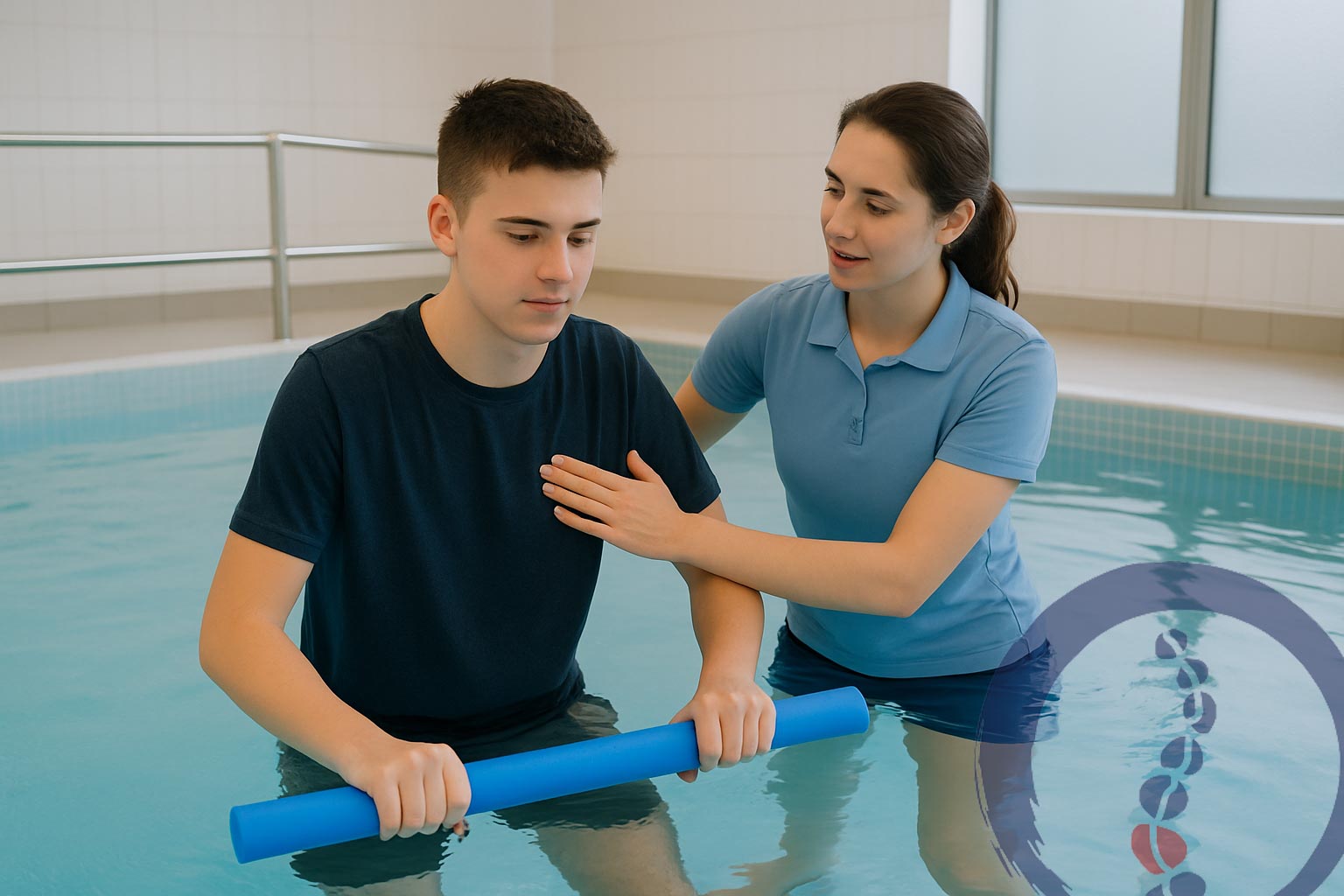
When exploring rehabilitation options, you may come across both hydrotherapy and physiotherapy. The two approaches can share similar goals, such as improving movement, strength and physical function, but they take place in different environments.
Understanding the difference between hydrotherapy and physiotherapy can help you understand why a physiotherapist may recommend land-based treatment, water-based rehabilitation or a combination of both.
At Bluebell Hydro & Physio in Birmingham, we provide both approaches and adapt rehabilitation to each patient’s individual needs.
Hydrotherapy vs Physiotherapy: What Is the Main Difference?
The main difference between hydrotherapy and physiotherapy is the environment in which rehabilitation takes place.
Hydrotherapy is physiotherapy-based rehabilitation performed in a specialist heated pool. The properties of water can support movement and provide resistance during controlled exercise.
Land-based physiotherapy takes place outside the pool. Treatment may include movement exercises, strengthening, balance work, functional rehabilitation and manual therapy when appropriate.
Neither approach is automatically better than the other. The most appropriate option depends on your condition, current physical abilities and rehabilitation goals.
What Is Hydrotherapy?
Hydrotherapy, sometimes described as aquatic or water-based physiotherapy, uses the physical properties of water as part of rehabilitation.
Buoyancy supports part of the body’s weight. As a result, some people may find certain movements more manageable in water than on land.
Water also provides resistance that can be used during controlled strengthening and movement exercises.
This environment may be useful for some people with reduced mobility, pain, weakness or difficulty performing certain land-based activities. However, hydrotherapy is not suitable for everyone, so an individual assessment is important.
Learn more about our specialist hydrotherapy service in Birmingham.
What Is Physiotherapy?
Physiotherapy can help assess and manage problems affecting movement and physical function.
Land-based physiotherapy may include:
- Mobility exercises
- Progressive strengthening
- Balance and coordination work
- Functional movement practice
- Movement and activity guidance
- Manual therapy when appropriate
The exact programme depends on the individual rather than following the same treatment plan for every patient.
Physiotherapy may form part of rehabilitation following injury or surgery. It can also support people experiencing musculoskeletal problems, reduced mobility or some neurological conditions.
Find out more about our physiotherapy service in Birmingham.
Hydrotherapy and Physiotherapy: How Do They Compare?
Both approaches can be used to work towards rehabilitation goals, but the physical environment changes how exercises are performed.
On land, the body works under normal gravitational conditions. This is particularly relevant when practising activities such as standing, walking and other everyday movements.
In water, buoyancy reduces the amount of body weight that needs to be supported during certain movements. Meanwhile, water resistance can be used to provide an appropriate physical challenge.
For this reason, the choice between hydrotherapy and land-based physiotherapy should be based on assessment rather than on one approach being considered universally better.
When Might Hydrotherapy Be Considered?
A physiotherapist may consider hydrotherapy when a patient finds some land-based exercises difficult or when the aquatic environment could provide a useful setting for rehabilitation.
Depending on individual circumstances, this may include people:
- Experiencing reduced mobility
- Recovering from certain surgical procedures
- Living with some neurological conditions
- Experiencing persistent musculoskeletal problems
- Finding some weight-bearing activities difficult
Suitability should always be assessed individually.
When Might Land-Based Physiotherapy Be Used?
Land-based physiotherapy can be useful when rehabilitation needs to focus on strength, balance, mobility and activities performed in everyday life.
It also allows exercises to progress under normal gravitational conditions and can help patients practise functional movements that are relevant to their individual goals.
Many patients begin directly with land-based physiotherapy without needing hydrotherapy.
Can Hydrotherapy and Physiotherapy Be Combined?
Yes. Hydrotherapy and land-based physiotherapy do not have to be separate treatment pathways.
For some patients, a rehabilitation programme may use both environments. For example, certain exercises may initially be more manageable in water, while other aspects of rehabilitation can take place on land.
The balance between hydrotherapy and land-based physiotherapy can also change as rehabilitation progresses.
However, not everyone needs both approaches. Your physiotherapist can recommend an appropriate programme following assessment.
Which Approach Is Right for You?
The choice between hydrotherapy and physiotherapy depends on factors such as your current mobility, symptoms, medical history and rehabilitation goals.
At Bluebell Hydro & Physio, we assess each patient individually. Having both hydrotherapy and land-based physiotherapy available allows our team to consider which environment is most appropriate at different stages of rehabilitation.
If you are unsure which option may be suitable, an initial assessment can help establish an appropriate starting point.